Carpal Tunnel Syndrome (CTS) Relief & Treatment
At Shelby Family Chiropractic, we offer non-invasive, conservative care to help relieve wrist pain, numbness, and tingling caused by Carpal Tunnel Syndrome so you can get back to your daily routine without discomfort.
What Is Carpal Tunnel Syndrome?
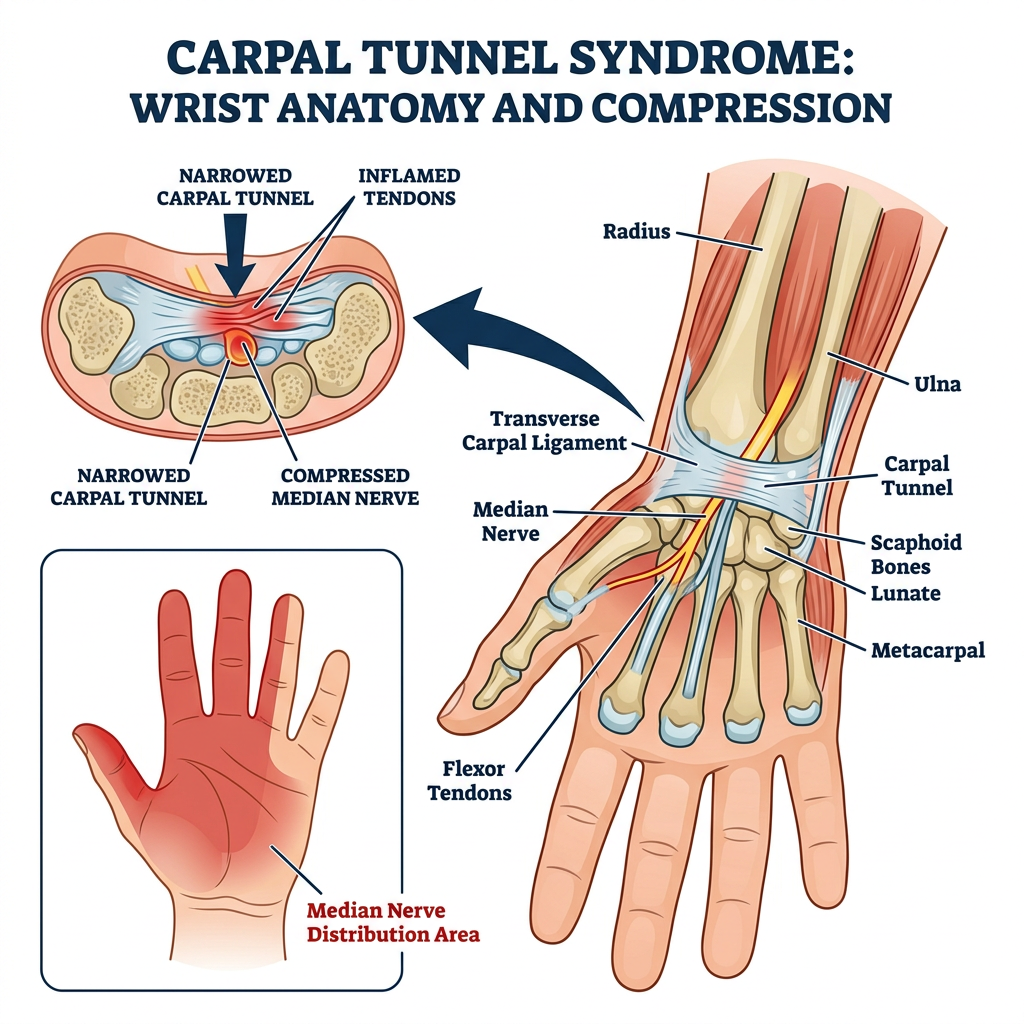
Carpal Tunnel Syndrome occurs when the median nerve—which runs from your forearm into your hand—becomes compressed inside the carpal tunnel, a narrow passageway of bones and ligaments at the wrist.
Because this nerve controls sensation and muscle movement in parts of the hand, pressure on it can lead to pain, weakness, and numbness that often radiates up into the forearm. CTS is the most common entrapment neuropathy (nerve compression injury).
Who Is Most at Risk?
- Women are three times more likely to develop CTS than men.
- Repetitive Workers: Assembly line workers, tailors, cleaners, food packers, and office workers using non-ergonomic setups are particularly susceptible.
- Symptoms usually impact the dominant hand first and can become severe if left untreated.
Common Symptoms of CTS
Symptoms often begin gradually—frequently waking people up at night because many sleep with flexed wrists. Over time, symptoms may become persistent throughout the day:
- Tingling, burning, or numbness in the thumb, index, middle, and ring fingers.
- Feeling of “swollen” fingers, even when no visible swelling is present.
- Weakened grip strength, making it hard to form a fist, turn doorknobs, or hold small objects.
- Reduced sensation, including difficulty distinguishing hot from cold by touch.
- Muscle wasting at the base of the thumb in advanced cases.
What Causes Carpal Tunnel Syndrome?
Nerve compression can be triggered by structural factors, injuries, or underlying health conditions, including:
- An naturally narrow carpal tunnel structure
- Wrist sprains, fractures, or localized swelling
- Repetitive wrist motion or prolonged use of vibrating hand tools
- Poor workstation ergonomics
- Inflammatory arthritis or joint misalignment
- Thyroid imbalance, diabetes, or pituitary overactivity
- Fluid retention during pregnancy or menopause
How We Diagnose CTS
Early diagnosis is essential to preventing permanent nerve damage. A thorough evaluation includes:
- Physical Examination: Assessing your hands, arms, shoulders, and neck to rule out other causes of nerve irritation.
- Provocative Testing: Diagnostic movements (such as the carpal compression or pressure-provocative test) that gently stress the nerve to pinpoint the exact site of compression.
- Advanced Testing (if needed): X-rays or nerve conduction velocity (NCV) tests to measure how fast electrical signals travel through the median nerve.
Effective Chiropractic Care & Non-Surgical Treatment
Chiropractic care focuses on conservative, non-invasive therapies to reduce pressure on the median nerve and promote natural healing:
- Gentle Joint Manipulation: Adjustments and mobilization of the wrist, hand, and cervical spine (neck) to restore alignment and mobility.
- Soft Tissue Mobilization: Targeted muscle work to release tension around the wrist and forearm.
- Therapeutic Exercises: Guided stretching and strengthening protocols to stabilize the wrist joint.
- Splinting & Support: Custom recommendations for night splints to keep your wrists neutral during sleep.
- Ergonomic & Lifestyle Guidance: Guidance on workstation adjustments, posture correction, and cold pack usage to reduce localized inflammation.
Note on Surgery: Surgery is only considered when severe cases do not respond to conservative care. The vast majority of patients achieve significant, lasting relief through non-surgical chiropractic treatment.
Tips to Prevent Carpal Tunnel Syndrome
Taking proactive steps at work and home can lower your risk of developing or re-aggravating CTS:
- Take Frequent Breaks: Rest your hands and stretch your fingers regularly during repetitive tasks.
- Maintain Neutral Wrists: Avoid bending your wrists all the way up or down when typing or holding tools.
- Improve Ergonomics: Adjust your desk, chair, and keyboard height to maintain proper posture.
- Keep Hands Warm: Cold environments make hands stiffer; use fingerless gloves if needed.
- Condition Your Wrists: Perform daily wrist and forearm stretches.
Ready to Find Relief from Wrist & Hand Pain?
Don’t let wrist pain or numbness hold you back. Contact Shelby Family Chiropractic today to evaluate your condition and start a personalized recovery plan.
Call our office at (205) 663-5444 to schedule your appointment!